




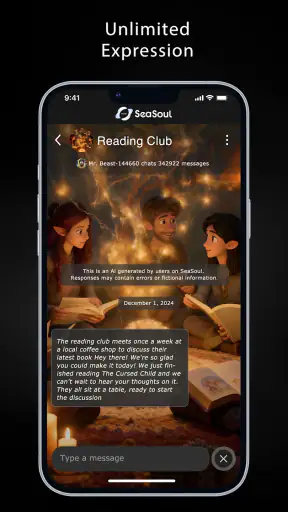
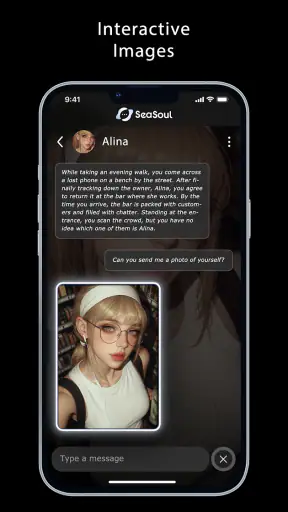
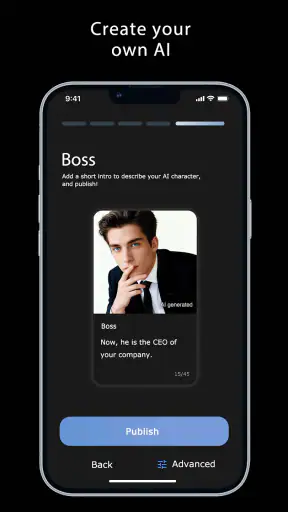



I approached Sea Soul: AI Chat as an entertainment app for people who want to spend time in AI-led conversations rather than simply search for information. Its central appeal is easy to understand: you open it, choose a conversational direction, and explore an exchange that feels more personal than a conventional search box. In my experience, that makes it most interesting when I treat it as a relaxed companion for imagination, reflection, or passing time, not as a replacement for a specialist tool.
The app comes from Seaart ai and is available free of charge, although optional in-app purchases range from forty-nine cents to two hundred sixty-nine dollars and ninety-nine cents per item. It is marked for mature users aged seventeen and above, which is an important part of deciding whether it belongs on a family device. The current version is 1.6.3.1787735335, and it runs on Android seven point zero or later. Those details matter less than the daily experience, but they help set realistic expectations before installing it.
How Sea Soul feels to read, navigate, and use
A conversation-first layout that is easy to understand
The strongest part of the experience is the basic mental model. I do not need to learn a complicated editing workflow or understand a large collection of menus before getting started. The app presents itself around conversation, so the main task is naturally expressed through reading and responding. That simplicity is useful for anyone who finds dense entertainment apps tiring, especially when a clear prompt-and-reply rhythm is preferable to a dashboard full of competing controls.
Readability is also shaped by the quality of the exchange itself. Short, focused prompts are easier to follow than long, vague requests, so I get better results when I ask for one thing at a time. For example, instead of asking for an entire story, a character profile, and advice in one message, I would first establish the situation, then ask for the next part. This creates a more manageable conversation and makes it easier to notice when the AI has misunderstood me.
That simple workflow is one of the app’s less obvious strengths. I can use the conversation as a gradual setup process rather than trying to write the perfect opening message. A useful approach is to state the tone I want, explain the role I expect the AI to take, and then correct small details as the exchange develops. This is more forgiving than many creative apps that demand a polished prompt before they become useful.
Where the reading experience can become demanding
AI conversation is not automatically easy to read just because the interface is uncomplicated. Replies can become lengthy, and a user who has difficulty tracking blocks of text may need to work harder when the response includes several ideas at once. I found it more comfortable to ask for concise replies, numbered steps, or one question at a time. These instructions are practical because they change the shape of the conversation without requiring a separate accessibility setting.
There is also a difference between visual simplicity and cognitive simplicity. A clean chat screen may still present a lot of information if the AI continues a role-play scene, explains a topic, and asks multiple follow-up questions together. For users who prefer predictable exchanges, it helps to establish boundaries early: request brief answers, ask the AI not to repeat context, and pause the conversation when it starts drifting. The app is flexible enough for this style, but the user has to guide it.
I would not choose it for someone who needs every interaction to be perfectly consistent. AI replies can vary in tone and usefulness, and a response that feels natural in one conversation may feel unfocused in another. That is not a failure unique to this app, but it becomes especially noticeable when the appeal depends on an ongoing conversational mood.
Useful ways to organize an everyday session
A realistic use case is a quiet evening when I want entertainment that responds to me instead of playing passively in the background. I might begin with a fictional scenario, ask the AI to keep the setting compact, and use short follow-up messages to decide what happens next. If I become tired, I can stop without needing to complete a level, finish an episode, or preserve a complicated project. That low-pressure structure suits irregular attention and short breaks.
Another practical workflow is to use the app as a brainstorming partner. I can describe a difficult choice in neutral terms, ask it to present several viewpoints, and then decide which suggestions are actually relevant. The important distinction is that I use the exchange to organize my thoughts, not to hand over the decision. For health, legal, financial, or crisis-related matters, a conversational entertainment app should not be treated as a qualified professional.
For people who enjoy creative writing, the most effective method is to keep a small set of instructions in mind: identify the characters, define the tone, specify the length, and correct continuity errors immediately. If I wait several messages before fixing a wrong detail, the conversation may build on it and become harder to steer. That is a genuine trade-off: the app can feel spontaneous, but maintaining a coherent long session takes active input.
Supporting different motor and sensory needs
Because the experience is based on reading and typing, it may be approachable for users who prefer text over fast visual action. There is no need to react to a rapidly changing game scene, and the user can usually compose a thought at their own pace. That makes it more suitable than many entertainment alternatives for someone who wants a slower interaction or who finds timed controls uncomfortable.
At the same time, typing can be a barrier for people with limited hand movement, tremors, fatigue, or pain. The app’s conversational design does not remove the physical effort of entering messages. A user who relies on device-level voice input may find the experience more manageable, but the quality of that interaction will depend on the phone’s keyboard and operating system rather than something I can attribute specifically to Sea Soul. Short prompts are therefore not only efficient; they can reduce repeated typing.
Reading-heavy use also raises sensory considerations. Long sessions may be tiring for people sensitive to screen glare, small text, or sustained visual concentration. I would use the phone’s own display adjustments, enlarge text where the operating system allows it, and keep conversations focused instead of letting them expand indefinitely. Those steps can help, but they do not turn the app into a dedicated audio-first or low-vision product.
Users who depend on screen readers should test the actual navigation on their device before committing to extended use. The conversational premise may be straightforward, yet labels, controls, and changing content can behave differently depending on the operating system and assistive technology. I would avoid assuming that a text interface automatically means complete screen-reader support.
Access in different places and states of mind
Sea Soul makes the most sense in situations where I can concentrate on a written exchange: a commute with a stable seat, a waiting room, a quiet break, or a relaxed session at home. It is less suitable when I need to watch traffic, work around other people, or divide attention between several tasks. A conversation that requires context is easy to lose when interruptions keep arriving.
This is where it differs from ordinary streaming entertainment. A video can continue while I look away, and music can work without visual attention. Sea Soul asks me to participate, so it offers more personal involvement but less convenience when my hands or eyes are occupied. Compared with a traditional game, it is generally less dependent on rapid movement and fixed objectives, but it can be more demanding in another way because the quality of the experience depends on what I write and how carefully I steer the exchange.
It can also suit people who want entertainment without a large commitment. I can have a short conversation and leave, then return to a different idea later. However, users who want a stable story with carefully controlled pacing may prefer an interactive fiction title or a conventional game. Those alternatives usually provide more deliberate structure, while this app’s attraction comes from the unpredictability and responsiveness of AI conversation.
The mature age classification should be taken seriously in shared households. I would not install it on a child’s device simply because the download itself is free. Parents and guardians should consider the type of conversational material a mature-rated AI entertainment app may invite, as well as whether the child can distinguish imaginative replies from reliable guidance. The age label is not a minor store detail; it directly affects who I would recommend it to.
Where the free model needs careful attention
Starting without an upfront charge lowers the barrier to trying the app, which is helpful if I am still deciding whether AI conversation is enjoyable for me. But free access and unlimited value are not the same thing. Optional purchases can become relevant during longer or more ambitious use, and the listed price range is wide enough that I would inspect each purchase screen carefully before confirming anything.
My practical advice is to decide in advance whether I am testing the experience or building a regular habit. For a casual trial, I would avoid buying anything until I know how often I return and whether the available conversations genuinely add value. On a shared device, purchase controls are especially important. The app’s entertainment purpose makes impulse spending easy to justify in the moment, so a deliberate pause before payment is worthwhile.
The popularity figures suggest that the app has reached a substantial audience: it has more than five million installs, an average rating of four point one, and around thirty-three thousand ratings. I see that as evidence of broad interest rather than a guarantee that every user will enjoy it. The rating sits in a believable middle ground, which matches my impression that the concept is appealing but the quality of individual conversations can depend heavily on expectations and prompting.
There are also practical reasons to keep sessions modest. AI entertainment can encourage repeated checking because each response invites another message. If I want the app to remain a pleasant break rather than an endless loop, I set a stopping point before beginning a longer scenario. Ending after a clear scene or a useful summary feels better than continuing until the conversation becomes repetitive.
Remaining barriers that affect the decision
The first barrier is inconsistency. A user looking for dependable factual answers, exact continuity, or a predictable emotional tone may become frustrated. Even when a reply sounds confident, I still need to judge whether it makes sense. That is why I see Sea Soul as a place for entertainment, ideas, and fictional interaction, not as an authority.
The second is the effort required to get the best results. The app may be easy to open, but good conversations often improve when I give clear context and correct the direction. Someone who expects a fully formed experience with no guidance may find the exchange disappointing. In contrast, a user who enjoys shaping a scenario will probably see that same involvement as the main attraction.
The third is suitability for people who need strong control over content. The mature rating is a clear signal that this is not the right choice for children or for anyone who wants a tightly moderated, universally suitable entertainment space. I would also skip it if I needed a private-feeling journaling tool, a professional counselor, or a reliable research assistant. Those needs call for products designed around those responsibilities rather than an entertainment conversation app.
Finally, the app may not be ideal for users who cannot comfortably read or type for extended periods. Device accessibility features may help with text size, input, or contrast, but the core activity remains a written conversation. That makes it more accessible than a fast-action game in some situations, yet less accessible than audio entertainment for someone who wants to keep their eyes and hands free.
My inclusive verdict
I recommend Sea Soul to mature users who are curious about AI conversations and want entertainment they can influence directly. Its clearest advantage is the ability to turn a simple prompt into an evolving exchange, whether I am exploring a fictional situation, testing ideas, or filling a short quiet moment. The free entry point makes experimentation easy, while the conversation format is less physically demanding than many action-oriented alternatives.
I would approach it with realistic expectations. The best experience comes from short, specific prompts, active correction, and a willingness to treat the AI as an improvising partner rather than a perfect narrator. Asking for concise replies can improve readability; defining the tone early can reduce confusion; and ending a session at a natural point can prevent the interaction from becoming repetitive. These small habits make a surprisingly large difference.
Seaart ai has created something that is approachable in concept but not universally effortless in practice. Its text-centered design may help users who prefer slower, non-timed entertainment, while typing, visual fatigue, unpredictable replies, mature content, and purchase decisions remain meaningful barriers. The right question is not whether the app can talk, but whether its style of conversation fits the way you read, type, concentrate, and spend your free time.
For me, it is worth trying when I want interactive amusement rather than a fixed show or structured game. I would choose another option for professional advice, child-friendly use, hands-free listening, or carefully authored storytelling. Within its intended space, though, Sea Soul offers a flexible way to explore AI dialogue, provided I stay aware of its limits and keep control of the conversation—and of my spending.


